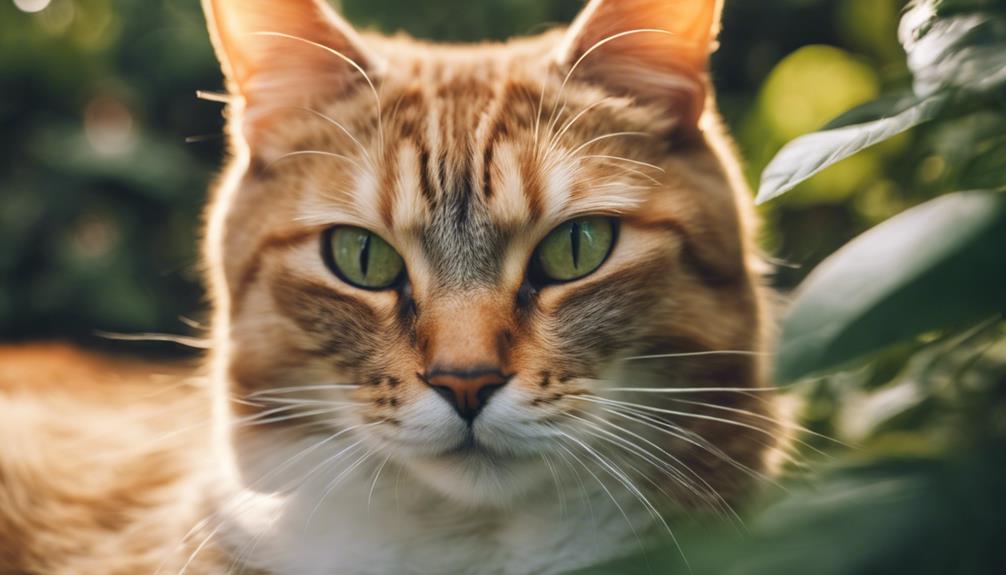
When your cat slow blinks, it’s a sign of trust and affection. This gesture, often compared to a gentle cat kiss, indicates that your feline feels safe and comfortable around you. In contrast to prolonged eye contact, which can be perceived as a threat, slow blinks signify relaxation and emotional connection. By reciprocating with your own slow blink, you reinforce this bond, promoting a deeper relationship. Paying attention to these signals can enhance your understanding of your cat’s feelings and needs. From here, you’ll explore more about how to strengthen this special connection.
Table of Contents
Understanding Cat Communication
Understanding how cats communicate is essential, as their behaviors and body language reveal much about their emotions and needs. When you observe your cat, pay attention to both vocal communication and tail language.
Cats express themselves through a variety of sounds, from purring to hissing. A gentle purr usually indicates contentment, while a loud yowl might signal distress or a desire for attention. By tuning in to these vocalizations, you can better understand what your feline friend is trying to convey.
Tail language is another critical aspect of cat communication. A cat’s tail can tell you a lot about its mood. For instance, an upright tail usually signifies happiness and confidence, while a low or tucked tail suggests fear or submission.
If the tail is puffed up, your cat may be feeling threatened and trying to appear larger.
The Science Behind Cat Slow Blinks
Slow blinks in cats are a fascinating form of non-verbal communication that signifies trust and affection. When your cat slow blinks, it’s using visual signals to convey its comfort and security in your presence. This behavior is rooted in feline behavior, where prolonged eye contact can be perceived as a threat. By closing their eyes slowly, cats show they’re not a danger and feel safe around you.
The science behind this gesture suggests that it’s a learned response between cats and their owners. When you reciprocate a slow blink, you reinforce this positive interaction, deepening the bond you share. Studies indicate that cats may also slow blink at each other to strengthen social connections, highlighting the importance of this behavior in their communication repertoire.
Understanding these visual signals is crucial for fostering a loving relationship with your cat. By recognizing and responding to slow blinks, you’re not just interpreting feline behavior but actively participating in a dialogue that nurtures trust. Embracing this knowledge allows you to create a supportive environment, ensuring your cat feels safe and cherished in your care.
Trust and Affection Indicators
Cats express trust and affection through various behaviors, with slow blinks being one of the most significant indicators of their comfort and emotional connection to you. When your cat gives you a slow blink, it’s as if they’re saying, ‘I trust you.’ This gesture is a sign that your feline companion feels safe in your presence, reinforcing the bond you share.
In addition to slow blinks, playful interactions also serve as vital indicators of trust. When your cat engages in play, it reveals their comfort level and willingness to let their guard down around you. These moments of fun create a positive environment where your relationship can flourish.
Recognizing these behaviors is essential for fostering a strong connection with your cat. By engaging in regular, gentle interactions, you not only enhance their sense of security but also deepen your emotional ties.
Your cat’s affectionate gestures, combined with their playful nature, highlight the importance of trust in your relationship. By understanding these signals, you can better serve your furry friend, ensuring that they feel loved and cherished in your home.
Relaxation and Comfort Signals
When your cat slow blinks at you, it’s more than just a sign of trust; it’s a signal of relaxation and comfort.
This non-threatening behavior fosters bonding and connection between you and your feline friend.
Understanding these signals can help you create a more harmonious environment for both of you.
Trust and Affection
A cat’s slow blink often signals trust and affection, indicating that your feline friend feels relaxed and comfortable in your presence. This behavior is a vital part of feline emotions and serves as a bonding ritual between you and your cat. When your cat gives you a slow blink, it’s their way of telling you they see you as a friend, not a threat.
Here are some insights into recognizing trust and affection through slow blinking:
- Relaxation: Your cat’s body is at ease, showing they feel safe around you.
- Eye Contact: Slow blinking encourages mutual eye contact, reinforcing your bond.
- Purring: Often accompanied by purring, indicating contentment and affection.
- Playful Behavior: A relaxed cat may engage in play, showing they trust you to join in.
- Proximity: Cats may approach you closer, demonstrating their comfort and trust.
Understanding these signals allows you to cultivate a deeper relationship with your cat. By responding with your own slow blink, you can reciprocate this display of affection, strengthening the emotional connection that enriches your time together.
Non-Threatening Behavior
Observing your cat’s relaxed posture and soft body language can reveal their comfort level, indicating they’re in a non-threatening state and feel secure in their environment. When a cat lies down with their paws tucked under, or sprawls out with their belly exposed, they’re demonstrating a high level of trust. This feline behavior suggests they see you as a safe companion.
Moreover, slow blinks are a significant part of cat emotions, representing a peaceful state. When your cat looks at you and slowly closes their eyes, they’re signaling affection and relaxation. This gentle gesture fosters a sense of connection and reassures your kitty that they can let their guard down around you.
Pay attention to other signs as well, like a relaxed tail position or purring. These signals are often accompanied by slow blinks, reinforcing their contentment. By recognizing these non-threatening behaviors, you can better understand your cat’s emotional state and provide them with the comfort they need.
Creating a serene environment for your feline can further enhance their sense of security, allowing for a deeper bond and mutual trust.
Bonding and Connection
Slow blinks from your cat serve as a powerful signal of bonding, showcasing their relaxation and comfort in your presence. When your feline friend shares these slow blinks, it’s not just a cute gesture; it’s a profound expression of their emotional connection with you. This behavior indicates that they feel safe and secure in your company, fostering a deeper bond.
Understanding these signals can enhance your relationship with your cat. Here are some key points to consider:
- Trust Building: Slow blinks signify that your cat trusts you.
- Affectionate Communication: It’s a way for your cat to express their feline affection.
- Relaxation Indicator: When your cat blinks slowly, they’re relaxed and comfortable.
- Encouraging Interaction: You can return the gesture to strengthen your bond.
- Emotional Connection: This behavior deepens the emotional connection between you and your cat.
How to Respond to Slow Blinks
When your cat gives you a slow blink, responding with a gentle blink of your own can strengthen your bond and communicate trust. This simple yet effective action serves as an appropriate reaction that reinforces your cat’s feelings of safety.
By incorporating this responding technique into your interactions, you’re not just mimicking your cat; you’re also demonstrating a deeper understanding of their social cues.
To execute this response, slowly close your eyes, hold them shut for a brief moment, and then reopen them. This mimics the slow blink and signals to your cat that you’re relaxed and trustworthy. You might find that your cat reciprocates, creating a delightful exchange of affection.
In addition to slow blinks, consider using a calm voice or soft gestures to enhance your communication. Cats respond positively to gentle tones and movements, further deepening the connection.
Other Cat Body Language
Understanding various aspects of cat body language is crucial for interpreting their emotions and needs effectively.
Cats communicate through a combination of vocalizations, like purring sounds, and physical signals, such as tail language. By paying attention to these cues, you can better serve your feline friend.
Here are some key elements of cat body language to watch for:
- Tail Position: A high, upright tail usually indicates happiness, while a low tail can signify fear or submission.
- Ear Position: Forward-facing ears show curiosity or interest, whereas flattened ears indicate annoyance or fear.
- Purring Sounds: While often a sign of contentment, purring can also indicate discomfort, so context matters.
- Whisker Position: Forward-facing whiskers suggest excitement or aggression, while whiskers pulled back can mean your cat feels threatened.
- Body Posture: A relaxed body posture is a good sign, while a tense or arched back may signal distress.
Building a Stronger Bond
Building a strong bond with your cat requires patience and attentiveness to their unique behaviors and preferences. By observing your cat’s body language, including slow blinks, you can better understand their feelings and foster deeper cat bonding. Slow blinks are a sign of trust and comfort, often referred to as a ‘cat kiss.’ When your cat slowly blinks at you, it’s their way of expressing feline affection, signaling they feel safe in your presence.
To strengthen this bond, engage in regular interactive playtime that stimulates their natural instincts, such as hunting or pouncing. Use toys that mimic prey and encourage your cat to chase, promoting physical and emotional well-being.
Additionally, create a peaceful environment by providing cozy resting spots and vertical spaces for climbing, which can help them feel secure. Establish a routine for feeding and grooming, as consistency fosters trust.
Lastly, be mindful of their preferences; some cats enjoy cuddling, while others may prefer solitude. By tuning into their needs and responses, you’ll cultivate a strong, affectionate relationship that enriches both your lives.
Frequently Asked Questions
Do All Cats Slow Blink, or Just Some Breeds?
Not all cats slow blink, as breed differences influence cat communication styles. While many cats exhibit this behavior, some breeds may be more prone to it, reflecting their unique social interactions and emotional expressions.
Can Slow Blinks Indicate Fear or Aggression?
When you observe a cat’s eyes narrowing, it can evoke a sense of unease. Slow blinks typically signal trust, but in certain contexts, they might also serve as fear signals or aggression indicators. Stay attentive!
How Can I Teach My Cat to Slow Blink?
To teach your cat slow blink techniques, relax your body and gently blink at them. Observe their feline body language for cues. With patience and consistency, your cat may mirror your calming gestures over time.
Are Slow Blinks More Common in Indoor or Outdoor Cats?
You might think slow blinks are rare, but they’re actually more common in indoor cats. Their relaxed indoor behavior contrasts with outdoor cats’ vigilant environment, making those gentle blinks a sign of trust and comfort.
Can Slow Blinks Mean My Cat Is Unwell?
If your cat’s slow blinks decrease, it could indicate health issues. Slow blinking is part of feline communication, signaling comfort. Monitoring these changes is essential, as they serve as important health indicators for your beloved pet.
Conclusion
In the delicate dance of cat communication, slow blinks are a gentle whisper of trust and affection.
When your feline friend gazes at you with half-closed eyes, it’s their way of saying, “I feel safe with you.”
Embracing this simple gesture not only deepens your bond but also cultivates a serene atmosphere in your home.
By responding in kind, you’ll nurture a connection that transcends words, fostering an unspoken understanding that enriches both your lives.