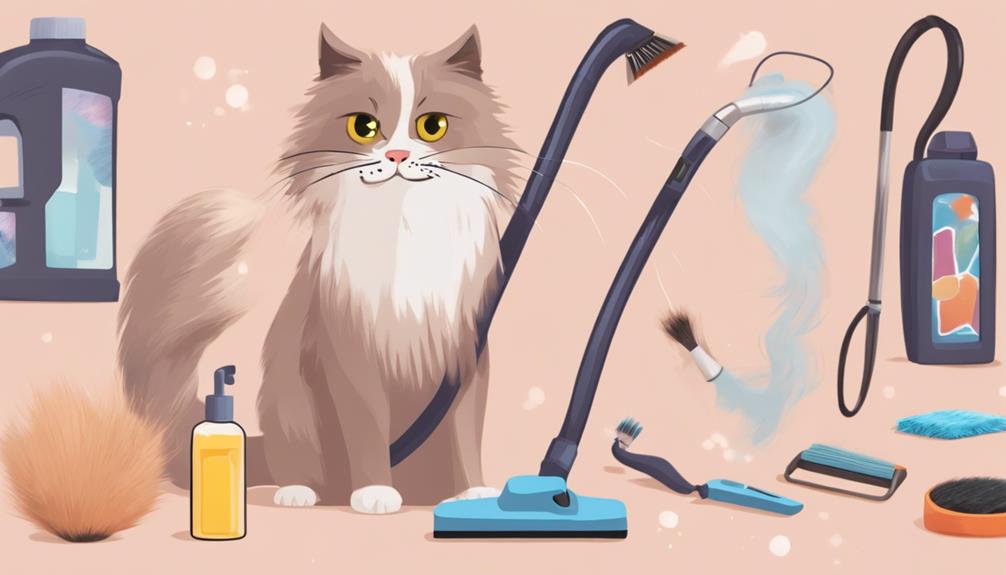
To manage your cat’s shedding effectively, start by understanding shedding cycles influenced by factors like daylight and hormones. Peak shedding usually happens in spring and fall to prepare for temperature changes. Create a regular grooming routine using tools like slicker brushes and combing more during shedding seasons. Ensure a balanced diet with proteins and offer fresh water always. Incorporate cat-friendly plants and minimize allergens in their environment. Consult with a vet for tailored advice and scheduled check-ups. By following these steps, you can help control shedding and promote your cat’s overall health and well-being.
Table of Contents
Understanding Cat Shedding Cycles
To effectively manage your cat’s shedding, it’s crucial to understand the various cycles through which their fur naturally sheds. Shedding triggers can vary among cats but commonly include factors like changes in daylight, temperature, and hormonal fluctuations.
Cats typically shed more during seasonal changes, with spring and fall being prime shedding seasons as they transition their coats to adapt to the weather. During these times, you may notice increased shedding as your cat prepares for either cooling down in summer or growing a thicker coat for winter.
Understanding these seasonal patterns can help you anticipate when shedding might peak, allowing you to take proactive measures to minimize fur buildup in your home. By being aware of these cycles, you can adjust your grooming routine, such as increasing brushing frequency during peak shedding times, to help manage the amount of loose fur your cat sheds.
Observing shedding triggers and seasonal patterns is key to maintaining a tidy home and keeping your cat comfortable throughout the year.
Implementing a Regular Grooming Routine
Establishing a consistent grooming schedule is essential for effectively managing your cat’s shedding. Regular grooming not only helps reduce shedding but also promotes a healthy coat and skin for your feline companion.
To start, invest in the right grooming tools such as a slicker brush, grooming gloves, and a fine-toothed comb. These tools will help remove loose fur and prevent matting, keeping your cat’s coat in top condition.
When it comes to grooming frequency, aim to brush your cat at least a few times a week, if not daily, especially during peak shedding seasons. Cats with longer hair may require more frequent grooming sessions compared to short-haired breeds.
Remember to be gentle and patient during grooming to make it a positive experience for your cat.
Maintaining a Healthy Diet and Hydration
Ensuring your cat maintains a healthy diet and stays properly hydrated are crucial factors in managing shedding effectively. Providing your feline friend with the right nutrition and ample fluids can greatly impact their overall health and reduce excessive shedding.
Here are some essential tips to help you maintain a healthy diet and hydration routine for your cat:
- Balanced Diet: Offer a well-balanced diet rich in high-quality proteins, essential fatty acids, and vitamins to support your cat’s skin and coat health.
- Hydration Sources: Ensure fresh water is available at all times and consider incorporating wet food into your cat’s diet to increase their water intake.
- Dietary Supplements: Consult with your veterinarian about adding dietary supplements like omega-3 fatty acids or biotin to promote a healthy coat and reduce shedding.
- Monitor Eating Habits: Keep an eye on your cat’s eating habits and consult a vet if you notice any changes in appetite or weight, as these could indicate underlying health issues.
Creating a Pet-Friendly Environment
Creating a welcoming and comfortable space for your cat is essential in minimizing shedding and promoting their well-being. To create a pet-friendly environment, start by incorporating cat safe plants like catnip, mint, or wheatgrass. These plants not only provide enrichment for your feline friend but can also help reduce stress, which in turn can minimize shedding.
In addition to plants, consider minimizing allergens in your home by regularly vacuuming and dusting to reduce pet dander. Opt for washable bedding and blankets that can be easily cleaned to prevent the buildup of allergens.
Providing your cat with a designated scratching post can help minimize shedding by promoting healthy skin and shedding cycles, while also saving your furniture from damage.
Lastly, ensure your cat has access to plenty of fresh water, a comfortable resting area, and toys for mental stimulation. By creating a safe and enriching environment for your cat, you can help reduce shedding and ensure their overall well-being.
Seeking Veterinary Advice and Support
Consulting with a veterinarian is crucial for addressing any concerns related to your cat’s shedding and overall health.
When seeking veterinary advice and support, consider the following:
- Veterinary Consultations: Schedule regular check-ups with a trusted veterinarian to monitor your cat’s shedding patterns and overall well-being.
- Behavioral Assessments: Seek professional guidance to evaluate any underlying behavioral issues that may contribute to excessive shedding.
- Nutritional Guidance: Consult with your veterinarian to ensure your cat is receiving a balanced diet rich in essential nutrients to support healthy skin and coat.
- Medical Interventions: In cases of severe shedding or skin issues, your veterinarian may recommend specific treatments or medications to alleviate shedding and promote skin health.
Frequently Asked Questions
Can Cat Shedding Patterns Indicate Health Issues?
Yes, cat shedding patterns can indicate health issues. Sudden changes in shedding indicators or excessive shedding may point to underlying health implications. Regular grooming and monitoring can help you detect potential problems early and seek veterinary care.
How Can I Reduce Shedding on Furniture and Clothes?
To reduce shedding on furniture and clothes, try using furniture covers and shedding tools regularly. These items can help minimize the mess and make cleanup easier. Consistent use will keep your home looking fresh and tidy.
Are There Specific Breeds That Shed Less?
Looking for low shedding breeds? Some cats like the Sphinx and Russian Blue shed less. Regular grooming techniques, such as brushing, can help manage shedding. Consider these breeds and grooming practices to reduce unwanted fur around your home.
Can Stress or Anxiety Increase Shedding in Cats?
When cats experience stress triggers, their shedding can increase. By focusing on anxiety management techniques such as creating a safe environment, providing interactive toys, and maintaining a consistent routine, you can help reduce shedding.
Is There a Way to Prevent Hairballs From Shedding?
To prevent hairballs from shedding, consider dietary changes and grooming techniques. Offer hairball-prevention cat food and regularly brush your cat to reduce loose hair. By addressing these factors, you can help minimize hairball issues in your feline companion.
Conclusion
Now that you have all the tools and knowledge needed to manage your cat’s shedding, remember that Rome wasn’t built in a day – consistency is key.
By staying on top of grooming, providing a healthy diet, creating a comfortable environment, and seeking veterinary guidance when needed, you can ensure your feline friend’s coat stays sleek and shiny.
Remember, managing shedding is a journey, not a destination.